Innsmouth
The Thing on the DoorstepInnsmouth is a run-down fishing port in Maine whose reputation for secrecy and occult lore makes it more than the Waite family’s hometown: it is the source of the histories, objects, and alleged practices that shape the conflict between Asenath Waite and Edward Pickman Derby. The story presents its darkest claims through local legend and Derby’s account, leaving their truth entangled with the question of whether his increasingly extraordinary testimony can be trusted.
Setting and Reputation
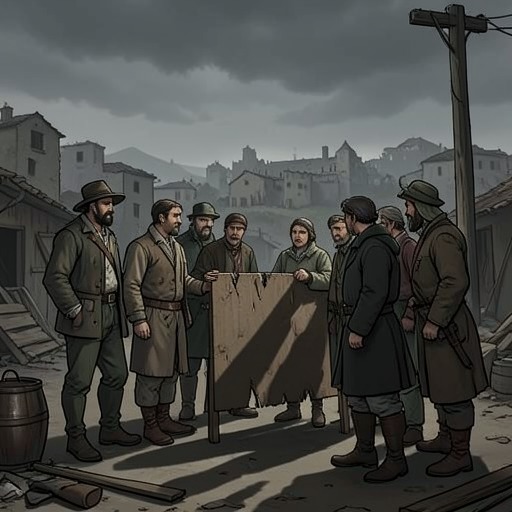
Innsmouth is described as half-deserted and crumbling, a place around which dark legends have gathered for generations. Stories associate its old families with an inhuman element and with terrible bargains said to date from around 1850. These reports establish the town’s unease before the narrative connects it to the Derbys: its reputation is already part of what makes Asenath’s background troubling to people who hear of her.
The distance between Innsmouth and Arkham is also social as well as geographic. The narrator observes that Arkham residents avoid going there whenever possible. Innsmouth thus remains a place known largely through rumor, family stories, and the occasional visit, rather than through an extended account of its ordinary life.
The Waite Household
Asenath is identified as one of the Innsmouth Waites and as the daughter of Ephraim Waite, whose household occupied a half-decayed mansion on Washington Street. People who had seen the house said that its attic windows were always boarded and that strange sounds sometimes came from within in the evening. The building’s closed upper floor and its reported sounds make the family home a concrete focus for the secrets attached to the Waites, though these details reach the narrator secondhand.
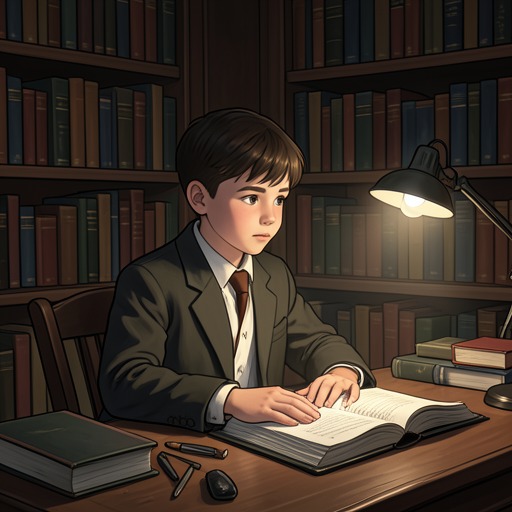
Ephraim was reputed to have been a prodigious student of magic. Local legend credited him with the power to raise or quell storms at sea, while the narrator recalls seeing him in his youth when he visited Arkham to consult forbidden books at the college library. Ephraim died insane under unusual circumstances shortly before Asenath entered the Hall School, where she was made the principal’s nominal ward under her father’s will. She had been his eager pupil, and at times was said to resemble him strikingly. Her mother is described as unknown and habitually veiled.
Asenath’s Return and the Derbys
After marrying Edward Pickman Derby, Asenath bought the old Crowninshield place in the country at the end of High Street in Arkham. The couple planned a brief trip to Innsmouth, from which three servants, books, and household goods would be brought to their new home. Their settlement in Arkham kept Asenath close to the college, its library, and its social circle; the narrator suspects that these attractions, rather than consideration for Edward or his father, explain why she did not return permanently to Innsmouth.
The journey nevertheless brought elements of the Innsmouth household into the Crowninshield house. Asenath had brought a large supply of books and apparatus from her former home, and Edward told the narrator that objects there had taught him surprising things. Under her guidance he began to advance rapidly in esoteric knowledge, though he would not describe some of the experiments she proposed. The household’s three servants also carried the Waite connection into Arkham: an exceptionally aged couple had served Ephraim, while the third servant was a young woman whose unusual features and persistent fishlike odor struck Edward as strange.
Innsmouth Lore and the Body-Exchange Conflict
As Edward’s marriage deteriorated, his account of Innsmouth’s history became bound up with his fear that Asenath was taking control of his body. He claimed that he had learned of the Waite family’s ties to beings from the sea and that Ephraim had discovered a way to persist beyond ordinary death. Edward further alleged that Ephraim had once exchanged forms with Asenath and poisoned the body he had left behind. These are Edward’s accusations, not events the narrator witnessed; their force in the story comes from how they recast the family’s inherited occult reputation as a possible explanation for the struggle over Edward’s identity.
The narrative never provides an independent account of Innsmouth or resolves the town’s legends into ordinary fact. Instead, it lets the place exert its influence through reported history, the Waite mansion, the objects and servants brought away from it, and Edward’s increasingly desperate interpretation of his marriage. Innsmouth’s obscurity therefore sustains the story’s uncertainty: it supplies a history for the supernatural claims without making those claims directly verifiable.